Arabic Shopify SEO for UAE Stores: A Practical Bilingual Guide
Why does bilingual search matter?
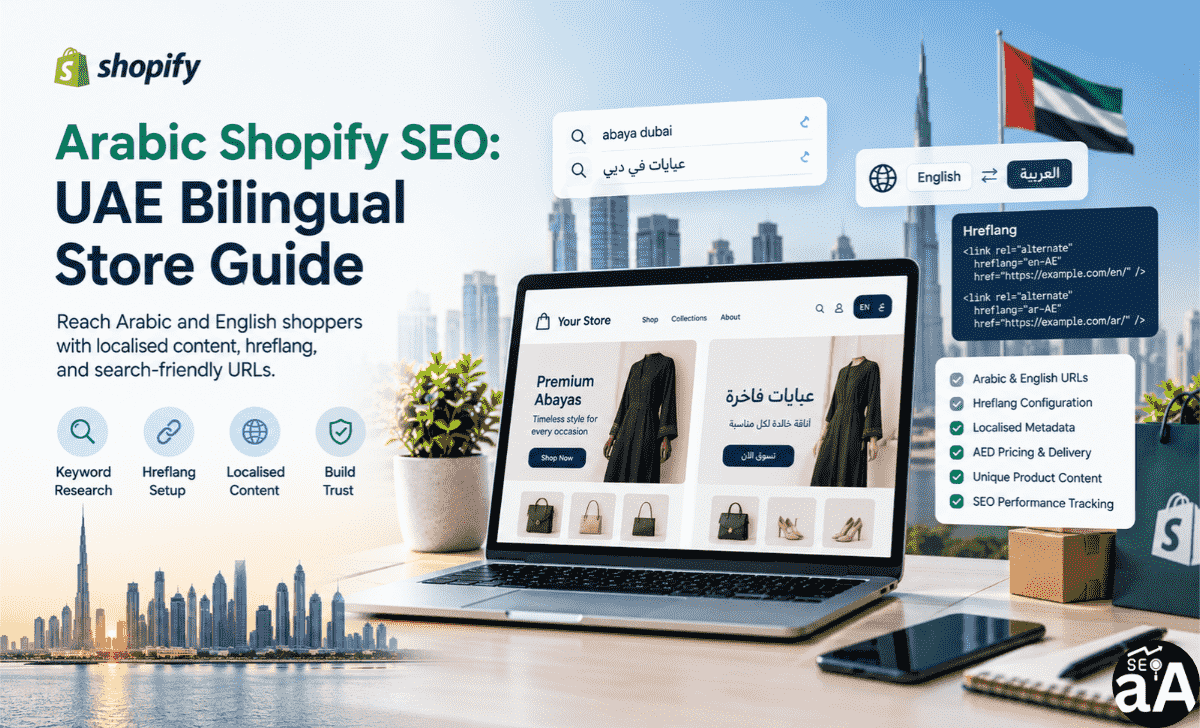
UAE shoppers search in Arabic and English. For example, one shopper may type “abaya Dubai”, while another searches “عباية نسائية في دبي”.
A strong Shopify SEO UAE strategy treats Arabic and English as separate search journeys, not duplicate pages.
How do you research keywords?
Build separate Arabic and English lists. Do not translate phrases word for word.
Examples:
• English: “abaya UAE”, “abaya Dubai”, “abayas online”.
• Arabic: “عبايات في الإمارات”, “عباية نسائية” “شراء عبايات”.
Add product types, materials, sizes, colours, brands, and buying terms. Review Search Console queries, customer questions, site searches, and competitor collections. Group terms by intent and assign one main topic to each page.
How should you structure language URLs?
Give each language version its own crawlable URL. Example:
English: example.com/en/collections/abayas
Arabic: example.com/ar/collections/عبايات
Keep the language switcher visible and link each page to its equivalent. Do not rely on cookies or automatic redirects as the only way to show a language. Choose the URL pattern in Shopify Markets.
How do you implement hreflang?
Hreflang signals language and regional alternatives. For UAE pages, use codes such as en-AE and ar-AE when both versions target UAE shoppers.
Check that each page references itself and its alternate, and that the alternate links back. Use complete, working URLs and correct language codes. Set the canonical tag to the same-language page.
Shopify adds hreflang for published languages through its language setup. Inspect the rendered page source after setup, especially if your theme or translation apps change SEO code.
How do you localise content and metadata?
Write unique titles, meta descriptions, H1s, and useful copy for each language. Translate meaning and buying intent, not only words. Ask a fluent Arabic reviewer to check product names, sizes, materials, and calls to action. Do not publish unreviewed machine translations.
Localise product descriptions, collection copy, filters, menus, size guides, FAQs, and image alt text. Use natural Arabic and correct right-to-left layout.
What builds trust with UAE shoppers?
Show AED prices where relevant. Explain delivery areas, fees, timeframes, payment methods, and returns before checkout. Test mobile navigation and checkout.
How do you avoid weak pages?
Do not create thin translated URLs at scale. Publish a language version only when it offers accurate, useful content. Connect equivalent pages with hreflang, fix broken language links, and redirect old URLs after changes.
How do you measure results?
In Google Search Console, compare queries and pages by clicks, impressions, CTR, country, and landing page. Separate Arabic and English query groups. In analytics, segment product views, add-to-cart actions, and purchases by landing-page language.
Bilingual Shopify SEO checklist
□ Research keywords separately by language.
□ Use stable, crawlable language URLs.
□ Validate reciprocal hreflang and canonicals.
□ Review translated metadata and product copy.
□ Test mobile navigation and right-to-left display.
□ Confirm AED prices, delivery, returns, and contact details.
□ Report organic traffic and sales by language.
Start with your highest-value collections. Improve each language version, validate the setup, and monitor visits and sales.
Need help finding gaps? Request a bilingual Shopify SEO review at aariful.com.