
Healthcare Website Design: 5 Digital Marketing Strategies Every Dental Practice Needs in 2026
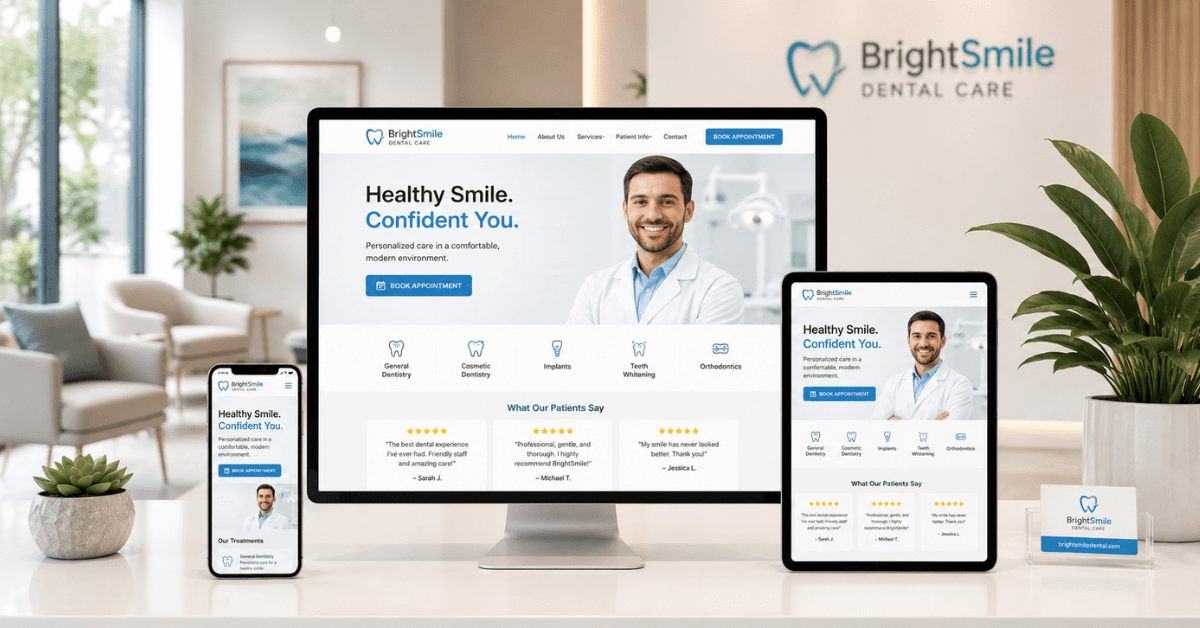
Your website is your digital front door. In 2026, patients judge your practice before they ever call. They check your site on their phone and look at your photos. They read your reviews. If your healthcare website design feels outdated or slow, they move on to the next practice.
Marketing has changed. Patients search differently. They ask questions. They want answers they can trust. The old strategies do not work anymore. Here are five digital marketing strategies that work in 2026.
1. Invest in Professional Healthcare Website Design
Your website is your most important marketing asset. A poor healthcare website design costs you, patients. Patients visit with a specific intent. They want to find answers, support, and a clear next step.
What a modern healthcare website needs:
- Mobile-first design. Over 74% of healthcare website traffic comes from mobile devices. Your site must work perfectly on phones.
- Fast loading speed. Slow sites lose patients. Every second of delay reduces conversions.
- Clear navigation. Patients should find what they need in three clicks or less.
- Obvious calls to action. Put appointment buttons on every page. Do not hide them on the contact page.
- Updated photos. Show your actual team and space. Outdated photos signal neglect.
The average conversion rate for healthcare websites is 3.6%. Top performers reach 7.2%. The difference is a professional healthcare website design that guides patients to take action.
2. Master Local SEO for Healthcare
Patients search for providers near them. 77% of patients begin their care journey online. If you do not show up in local search results, you lose patients to competitors.
Local SEO for healthcare requires:
- Optimized Google Business Profile. This accounts for 32% of local pack ranking factors.
- Accurate NAP data. Name, address, and phone number must be consistent everywhere.
- Location-specific service pages. Create separate pages for each location.
- Recent patient reviews. Review recency matters more than total count. Google uses recency to determine if your practice is active.
- Local keywords. Target “dentist near me” and treatment-specific local searches.
Local SEO alone boosts appointment bookings by 32%. This is one of the most cost-effective strategies for dental practices.
3. Build Trust Through Content and E-E-A-T
Healthcare decisions involve fear and uncertainty. Patients need to trust you before they book. Your content must demonstrate Experience, Expertise, Authority, and Trustworthiness (E-E-A-T).
What trust-building content looks like:
- Doctor bios with credentials. Show who provides treatment and what qualifications they hold.
- Clear treatment pages. Explain procedures in simple language. Reduce fear and confusion.
- Patient testimonials. Place them close to conversion points.
- Educational content. Answer real patient questions. Write for patients, not search engines.
- Medically reviewed content. Show that experts have verified your information.
SEO rewards content that helps people. Thin pages written for algorithms get pushed down. Useful content builds trust. Trust improves rankings.
4. Re-Engage Your Existing Patients
About 20% of a dental practice’s patient base is inactive. These patients are still local. They just are not scheduling care. Re-engaging them is cheaper than acquiring new patients.
High-impact re-engagement strategies:
- Unscheduled treatment reminders. Follow up on diagnosed but unscheduled procedures.
- Overdue hygiene nudges. Send gentle reminders for checkups.
- Seasonal offers. Promote whitening or elective care.
- Post-appointment follow-ups. Show you care after treatment.
Text messaging works best. 81% of consumers read texts within five minutes. Text-first practices see higher response rates because they remove friction.
5. Optimize for AI and Zero-Click Search
Search is changing. Nearly 8 in 10 adults go online to answer health questions. Almost two-thirds see AI-generated responses during their search.
What this means for your practice:
- Structure content for AI Overviews. Use clear headings and direct answers.
- Include FAQ sections. Answer common patient questions directly.
- Use structured data. Help search engines understand your content.
- Build a reputation across multiple platforms. AI tools cannot access Google reviews. They look for corroboration across platforms. Do not rely on Google alone.
Reputation is no longer judged on a single platform. Build credibility everywhere. Get reviews on Facebook, Healthgrades, and other sites.
The Bottom Line
Digital marketing for dental practices in 2026 is about connection, not promotion. Patients do not feel marketed to. They feel remembered.
Your action plan:
- Audit your healthcare website design. Is it mobile-friendly? Is it fast?
- Optimize your Google Business Profile. Get recent reviews.
- Create patient-focused content. Answer real questions.
- Re-engage inactive patients. Use text messaging.
- Build a reputation across multiple platforms.
Healthcare organizations prioritizing digital marketing see revenue growth spike by 28%. The strategies above work. Start today.
Need professional healthcare website design or SEO services for your dental practice? Contact us for a free consultation.
Frequently Asked Questions
1. What is healthcare website design, and why does it matter for dentists?
Healthcare website design is the process of building a patient-focused website that loads fast, works perfectly on mobile devices, and makes booking appointments easy. It matters because 74% of healthcare traffic comes from phones. If your site is slow or hard to use, patients leave and book with a competitor.
2. What makes a good healthcare website UI design in 2026?
A good healthcare website UI design includes mobile-first layouts, fast loading speeds, clear navigation, and obvious appointment buttons on every page. Top-performing sites also use updated photos of the actual team and space. These elements help guide patients to take action quickly.
3. How does local SEO for healthcare help my dental practice?
Local SEO for healthcare helps your practice show up when nearby patients search for a dentist. It requires an optimized Google Business Profile, consistent name and address details across the web, and location-specific service pages. Local SEO alone can boost appointment bookings by 32%.
4. What is the average conversion rate for a healthcare website?
The average conversion rate for healthcare websites is 3.6%. Top performers achieve 7.2%. The difference comes from professional design that guides patients toward clear calls to action, like scheduling an appointment or calling the office.
5. How can I build trust through my healthcare website SEO?
You build trust by demonstrating E-E-A-T, which stands for Experience, Expertise, Authority, and Trustworthiness. Add detailed doctor bios with credentials, explain procedures in simple language, place patient testimonials near booking buttons, and make sure all medical content is reviewed by experts.
6. What is the best way to re-engage inactive dental patients?
The best way is to send text message reminders. About 20% of a practice’s patient base is inactive. Use texts for unscheduled treatment reminders, overdue hygiene checkups, and seasonal offers. 81% of consumers read texts within five minutes, making this strategy highly effective.
7. How does AI search change the way patients find dental practices?
AI search changes things because nearly 8 in 10 adults go online for health questions, and two-thirds now see AI-generated answers. To stay visible, structure your content with clear headings, include FAQ sections, use structured data, and build reviews across multiple platforms, not just Google.
8. What local SEO factors matter most for medical professionals?
The most important local SEO factors for medical professionals are an optimized Google Business Profile, which accounts for 32% of local pack rankings, and recent patient reviews. Recency matters more than total review count. Google uses recent activity to determine if your practice is active and relevant.
9. How can I get more patient reviews for better local SEO?
Ask every patient for a review immediately after a positive appointment. Make it easy by sending a direct link via text or email. Also, encourage reviews on multiple platforms like Facebook and Healthgrades. AI tools look for corroboration across sites, so do not rely on Google alone.
10. What should I do first to improve my dental practice’s digital marketing?
Start by auditing your healthcare website design. Check if it is mobile-friendly and fast. Then optimize your Google Business Profile and collect recent reviews. Next, create patient-focused content that answers real questions. These first steps deliver the fastest return on investment.